

The short answer
Launching a corporate venture capital fund is a sequence of decisions: the mandate, the
size, the legal structure, the governance, the team and only then the first deals. PwC
Middle East groups the work into three pillars (strategy, structure and operations) and eight
success factors. We found no published standard for how long it takes from board approval to
first investment, so plan from your own approvals and regulator timelines. Take legal advice
early, because the right structure depends on whose money you invest and where the fund sits.
Start with the mandate, not the vehicle
PwC Middle East’s 2025 guide to corporate venture capital in the GCC sets out three pillars.
Strategy covers goals aligned with the corporate strategy, an investment mandate benchmarked
against peers and sized against the annual R&D budget, and the fields to invest in. Structure covers
governance and decision rights, and the investment process. Operations covers the team, systems,
and links to business units, including reporting, budgets and incentives. The order matters: Fenwick,
a law firm, advises setting quantifiable strategic goals before choosing a structure, and notes that
following the herd is not a business reason to start a fund.
PwC also describes four mandate types, drawn from the Chesbrough framework. They sit on two
axes: whether the main aim is strategic or financial, and whether the investing is tightly or loosely
linked to the core business.
| Mandate type | What it is for |
|---|---|
| Strategic, tight | Drives the core business, by investing in startups close to current products and operations. |
| Strategic, loose | Explores new areas or hedges against disruption without a direct link to today’s products. |
| Financial, tight | Earns a return, with some link to the corporate’s value chain. |
| Financial, loose | Pure financial return, with no strategic link required. |
Table 1. Source: PwC Middle East, Corporate venture capital in the GCC, 2025 edition, which draws on the Chesbrough framework.
Choose a structure
Three structures recur in the sources. Fenwick describes a fund with the parent as a single limited partner, a wholly owned subsidiary, and a fully integrated team. Global Venturing (22 May 2026) adds that the wholly owned subsidiary is the most common and allows separate pay, including carried interest or a synthetic equivalent.
| Structure | How it works | Trade-off |
|---|---|---|
| Fully integrated | Staff work for the parent and each deal needs business-unit support. | Easy to set up and easy to shut down; documents sit in the parent’s name. |
| Wholly owned subsidiary | A separate company with its own investment committee, owned by the parent. | Most common; allows separate pay, including carry or a synthetic version. |
| Single-LP fund | The parent is the only limited partner in a fund run by a manager. | Most independence and clean accounting; rarely the first choice, and often emerges as the unit matures. |
Table 2. Sources: Fenwick (2019); Global Venturing (22 May 2026).
Check the regulatory perimeter early
Whether a regulator is involved depends on whose money is invested and how. A corporate investing only its own balance sheet may fall outside fund rules in some places, while raising or managing other people’s capital usually triggers licensing. That is a general principle, not a rule from the sources below, so ask counsel. The table summarizes what we found in each jurisdiction.
| Jurisdiction | What we found | Caution |
|---|---|---|
| ADGM | A dedicated venture capital fund regime: closed-ended funds offered by private placement to professional investors, no minimum regulatory capital, and subscriptions capped at US$100 million unless the regulator agrees otherwise. Professional indemnity insurance is required. | The regulator’s flyer is undated and a later consultation may change it. Confirm fees and timelines with the FSRA. |
| DIFC | Qualified Investor Funds (US$500,000 initial subscription) and Exempt Funds (US$50,000), both for professional clients only. | The DFSA published Consultation Paper 173 on 7 July 2026, with comments due 7 September 2026. It proposes abolishing the external fund manager regime. Check whether it has been finalized. |
| Saudi Arabia | The Capital Market Authority (CMA) approved Simplified Investment Funds on 2 March 2026: CMA-licensed managers, institutional private placement, and notification to the CMA instead of the 15-day review. | The details are in the CMA instructions; take Saudi legal advice before relying on this summary. |
| Qatar | Venture capital and private equity are regulated activities in the Qatar Financial Centre, with GP/LP fund structures available. | We found no published fees, minimum capital or timelines. |
Table 3. Sources: ADGM FSRA venture capital funds flyer; Gibson Dunn (13 July 2026); Latham & Watkins (7 April 2026); Qatar Financial Centre. We found no Bahrain regulator source and have not covered Bahrain. This is general information, not legal advice.
Governance, team and the first deals
PwC lists a governance, risk and compliance framework, named decision-makers and executive sponsors, and a RACI matrix that sets delegated authority. It also recommends incentives tied to financial and qualitative targets, extended to business-unit staff, and a business-unit representative assigned to each portfolio company. Fenwick advises deciding how much autonomy the team has, for example full authority within limits or a separate committee with final approval, and warns that a corporate must be able to move at venture speed.
Global Venturing (22 May 2026) gives practical examples. RTX aimed to have a tracked pipeline and a few strategically relevant investments within 18 months, and added a dedicated portfolio lead only when the portfolio neared about 20 companies. BHP’s head spent much of the first 18 months meeting stakeholders so the investment thesis was understood by business units and the C-suite. For ADGM-regulated managers, the regulator’s flyer lists key personnel such as a senior executive officer, a compliance officer and a money laundering reporting officer.
We found no published standard for how many months pass between board approval and a first investment. The same sources suggest the longest external steps are likely to be regulator onboarding and the legal documents, but no source gives durations. Build your timeline from your own approval cycle and your regulator’s published process.
Gulf examples
| Vehicle | Sponsor | What is published |
|---|---|---|
| STV | stc | stc provided US$500 million at set-up in 2018 and committed a further US$300 million (Wamda, October 2022)[cite: 15]. |
| Tali Ventures | stc Group | Launched in March 2024 for AI, fintech, proptech and IT; fund size not disclosed in the sources we read[cite: 15]. |
| 1957 Ventures | Riyad Bank and Riyad Capital | A CMA-regulated closed-end fund launched in May 2024 with more than SAR 800 million in commitments, aiming to build 15 companies over four years[cite: 15]. |
| Aramco Ventures | Aramco | In January 2024 Aramco added US$4 billion over four years, taking the program to US$7 billion[cite: 15]. |
| du Ventures | du | A US$50 million fund announced on 3 June 2026 and managed by Shorooq[cite: 15]. |
Table 4. Sources: Wamda (26 October 2022); Global Corporate Venturing (11 March 2024); King & Spalding (25 September 2024); Argaam (4 September 2024); Reuters via Malay Mail (17 January 2024); du press release (June 2026).
Common pitfalls
Where TURN8 fits
TURN8 is a venture operating partner for GCC corporates and sovereign-linked institutions. Its four engines are venture building, corporate venture capital, an AI studio and the TURN8 accelerator. A corporate can work with TURN8 in three ways: Operate For You, where TURN8 designs, builds and operates; Operate With You, a hybrid alongside your teams; or Build to Own, where TURN8 stands up the capability, trains your people and hands over operations. Read about corporate venture capital at TURN8 and the TURN8 method.
For teams preparing a launch, TURN8 Academy offers course 201-CVC, CVC Launch Lab. TURN8 Academy runs private cohorts for one organization, with up to 20 participants, held on site at your location, usually over one to two days. Courses are taught by operators, and participants receive a certificate of completion and join the alumni community.
Planning a CVC launch?
TURN8 can help you test the mandate, structure and governance before you commit. Request a Private Briefing or Discuss a Mandate.
Frequently Asked Questions
What are the steps to launch a corporate venture capital fund?
Set the strategic goals and mandate first, then size the fund, choose the legal structure, set up governance and decision rights, build the team and process, and only then source deals. PwC Middle East groups this into three pillars: strategy, structure and operations.
How long does it take to set up a CVC fund?
We found no published standard for the time from board approval to a first investment. The longest external steps are likely to be regulator onboarding and legal documents, so build your timeline from your own approval cycle and your regulator’s published process.
What is the best structure for a corporate venture capital fund?
The wholly owned subsidiary is the most common structure, according to Global Venturing (2026), and it allows separate pay. A single-LP fund gives more independence, while a fully integrated team is easiest to set up and to shut down. The right answer depends on your mandate and on legal advice.
Do you need a license to run a CVC fund in the GCC?
It depends on whose money you invest and where the fund is based. A corporate investing only its own balance sheet may fall outside fund rules, while managing other investors’ money usually requires a license. ADGM, DIFC, Saudi Arabia and Qatar each have their own regimes, so take legal advice.
What is the difference between a strategic and a financial CVC mandate?
A strategic mandate aims to benefit the corporate’s core business, for example through technology access or new markets. A financial mandate aims mainly at investment returns. PwC also separates tight links to the core from loose ones, which gives four mandate types.
Which Gulf companies run corporate venture capital funds?
Examples include STV and Tali Ventures from stc, 1957 Ventures from Riyad Bank, Aramco Ventures, and du Ventures. PwC reports that CVC took part in 22% of GCC venture deals in 2024.
Important information
This article is general information about corporate venture building and corporate venture capital and is not financial, investment, legal or tax advice. Figures are taken from the sources listed below and were checked in October 2026; they may change. Examples and thresholds are illustrative unless stated. Past results do not predict future performance.
Sources
- PwC Middle East, Corporate venture capital in the GCC, 2025 edition (3 June 2025; uses MAGNiTT data for 2024).
- ADGM, Venture capital funds flyer (undated).
- Gibson Dunn, DFSA proposes reforms to the DIFC funds regime (13 July 2026).
- Latham & Watkins, Saudi Arabia regulator approves Simplified Investment Funds (7 April 2026).
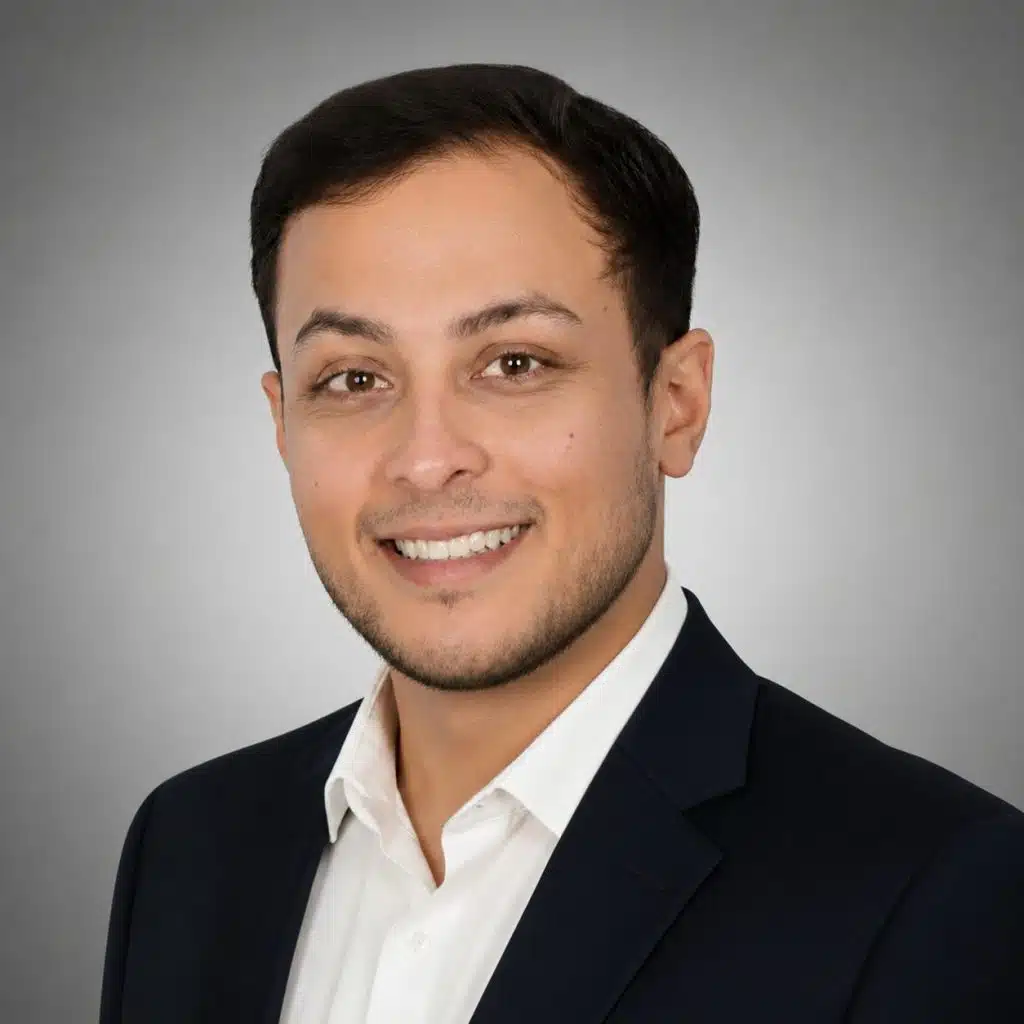
Partner · TURN8
Ahmed Hassan is a Partner at TURN8, the venture operating partner for GCC corporates and sovereign-linked institutions. He leads the firm’s corporate venture offerings, the venture studios, accelerators, and CVC platforms. TURN8 builds and runs for its partners, and owns go-to-market across every engagement.