
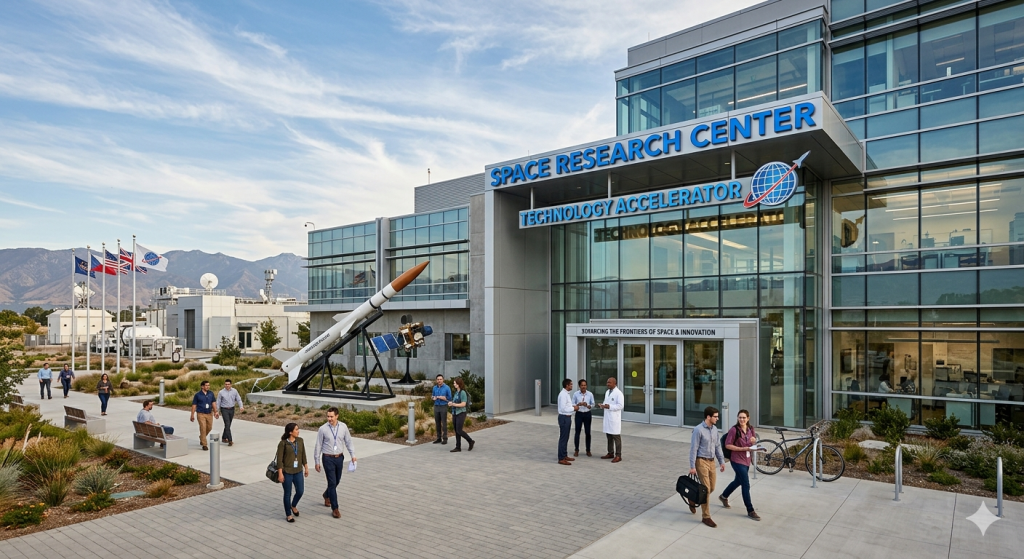
Space Research Center - Technology Accelerator
Challenge
A government space research center wanted to establish an accelerator program to:
• Support startups commercializing space technologies, including satellites, remote sensing, and space data applications.
• Foster a local space industry ecosystem aligned with the country’s space program ambitions.
• Connect space tech startups with government and commercial customers, including telecommunications, agriculture, urban planning, and defense.
• Position the country as a hub for space innovation in the Middle East.
Key Constraints:
• Niche market: Limited number of space tech startups globally, fewer in the regional ecosystem.
• Technical complexity: Space technologies require specialized expertise for evaluation and support.
• Customer access challenge: Space tech applications span diverse industries, including telecom, agriculture, and urban planning, and require a broad partner network.
• Capital intensity: Space startups typically require larger funding rounds than software companies.
TURN8’s Approach
Program Design and Positioning
• Defined accelerator focus: Space data applications, satellite services, space tech components, rather than rocket and launch technologies that were identified as outside the scope.
• Developed a six-month program structure that includes technical validation, customer discovery, pilot execution, and funding preparation.
• Established partnership network: government entities, including telecom, agriculture, urban planning, satellite operators, space agencies, and investors.
• Designed selection criteria emphasizing technology readiness (TRL 5+) and clear commercial applications.
• Deployed a systematic sourcing model to identify space tech startups globally.
• Managed marketing campaign to generate applications.
• Developed a technical review panel of space scientists, satellite engineers, and commercial experts, which evaluated applications.
Outcomes
Key Learnings:
• Technical depth essential: Space tech evaluation requires specialized expertise beyond a typical startup accelerator.
• Customer access was the primary value: Startups had technology but needed help identifying and reaching customers in a new market.
• Government partnerships are critical: Public-sector customers are more accessible and more willing to pilot innovative space tech than commercial entities initially.
• Capital intensity manageable: Contrary to assumptions, space data and application startups didn’t require larger funding than software startups, dramatically.
• Global sourcing is necessary: A limited regional space tech ecosystem requires casting a wide net internationally.