

Saudi Arabia needs roughly 175,000 additional healthcare workers by 2030 — approximately 69,000 doctors, 64,000 nurses, and 42,000 allied health professionals, according to multiple workforce planning assessments tied to Vision 2030. That number tends to trigger a predictable response: recruit internationally, expand training pipelines, offer incentive packages.
All reasonable. None sufficient.
The math doesn’t work if you treat this as a staffing problem. Global healthcare labor markets are tight everywhere. The US, UK, Germany, and Australia are all running their own shortages. The pool of internationally mobile clinicians willing to relocate to the Gulf is finite and shrinking. Competing for the same constrained supply as every other country with aging demographics is a bidding war, not a workforce plan.
AI Adoption in GCC Healthcare: The Procurement Bottleneck
The more interesting question is a design question. Are you building 2030 hospitals and clinics around the assumption that every clinical and administrative function requires a human? Or are you designing hybrid systems where AI handles the work that doesn’t need a physician’s judgment, freeing clinicians to operate at the top of their training?
This distinction matters for CVC programs and corporate health systems because it changes what gets funded, what gets built, and where the defensible positions sit.
The data from physicians themselves is telling. According to a 2025 survey of over 1,000 US physicians across 106 specialties, 67% already use AI daily. Eighty-nine percent use it at least weekly. Eighty-four percent say it makes them better at their jobs. GCC-specific adoption data at this scale does not yet exist, but the directional signal is clear: clinicians are not the resistance. They are ahead of their institutions.
But here is the tension: 81% of those same physicians are dissatisfied with how their organizations handle AI adoption. Seventy-one percent have little to no influence on which tools get selected. The people closest to patient care, the ones already using AI and seeing results, are largely excluded from the procurement decisions that determine what ships.
This is the gap that matters for anyone investing in or deploying healthtech in the Gulf. The bottleneck is not clinical demand. It is not physician willingness. It is institutional adoption infrastructure: procurement, contracting, risk ownership, and regulatory navigation.
Where healthtech ventures actually stall in the GCC
Most healthcare innovation in the Gulf doesn’t fail at the pilot stage. Pilots are easy to approve. They carry limited risk, generate good optics, and give innovation teams something to present. The failure happens when procurement, contracting, and risk ownership begin. That is where most healthtech ventures stall, sometimes for years.
For CVC programs evaluating healthtech investments in the GCC, this reality should shape how you assess portfolio companies. A strong product is necessary but insufficient. The ventures worth backing have a procurement strategy that accounts for how Gulf health systems actually buy, approve, and integrate technology. That means understanding local regulatory frameworks, data residency requirements, and who inside these institutions owns the risk when an AI system touches a clinical workflow.
There is a related design error that keeps repeating. Health tech products built for Western workflows break in the Gulf. Care delivery models differ. Regulatory structures differ. Patient demographics and disease burden profiles differ. Arabic language clinical documentation is still underserved by most AI systems. A product that works at a US academic medical center does not automatically transfer to a Saudi hospital network.
The ventures that will matter here are the ones designed from the ground up for Gulf healthcare realities.
The Execution Gap: Deploying Healthtech in the GCC
Consider what the 175,000-worker gap actually creates as an investment opportunity. It is a cascade of related problems, each with its own venture thesis.
Clinical decision support that lets a smaller physician workforce handle higher patient volumes without degrading care quality. Administrative AI that eliminates the documentation burden consuming 30-40% of a clinician’s day. Remote patient monitoring that shifts chronic disease management out of facilities and into homes, reducing the per-patient staffing requirement. Diagnostic AI that handles routine imaging reads, freeing radiologists for complex cases. Scheduling and resource optimization that extracts more throughput from existing staff.
These technologies exist today in various stages of maturity. The question is not whether they work. The question is whether they can be deployed within the specific procurement, regulatory, and operational environment of Gulf healthcare systems.
Data Sovereignty in GCC Healthcare: The Race to Own Clinical Compute
There is another dimension worth watching. Compute is becoming healthcare infrastructure. As AI moves deeper into clinical workflows, the organizations that control compute capacity, data pipelines, and model deployment infrastructure gain structural advantages. This is not just a technology question. It is a sovereignty question. Who owns national health data in the Gulf? Where does it sit? Who trains models on it? These decisions, being made now, will determine who captures value from healthcare AI for the next decade.
GenAI is already quietly reshaping clinical workflows across the GCC. It is showing up in clinical documentation, patient communication, care coordination, and operational planning. Most of this is happening informally, driven by individual clinicians rather than institutional strategy. That gap between grassroots adoption and institutional readiness is itself a venture opportunity. The companies that help health systems formalize, govern, and scale what their clinicians are already doing on their own will have a meaningful head start.
Healthcare is one of the sectors where workforce constraints, regulatory complexity, and AI readiness intersect most sharply. It is also where execution discipline matters most. The margin for error in clinical AI is narrow, and the procurement cycles are long.
The 175,000-worker gap is real and will not close through recruitment alone. The ventures worth backing are the ones designed for hybrid human-AI care delivery, built for Gulf procurement realities, and operated by teams that understand both the clinical and the institutional terrain.
For any CVC program or corporate health system evaluating this space: are you investing in products that require the system to change in order to adopt them, or in solutions that fit how the system actually buys, approves, and operates today — while pulling it toward where it needs to be by 2030?
Frequently Asked Questions
What is the Saudi healthcare worker shortage by 2030?
To meet Vision 2030 demands, Saudi Arabia needs approximately 175,000 additional healthcare workers, including 69,000 doctors, 64,000 nurses, and 42,000 allied health professionals.
How can AI solve the GCC healthcare gap?
AI mitigates staffing shortages by automating administrative tasks, handling routine diagnostic imaging, and enabling remote patient monitoring, allowing clinicians to manage higher patient volumes efficiently.
Why do healthtech startups fail in the GCC?
Most healthtech ventures in the Gulf stall during the institutional procurement and contracting phases due to complex local regulatory frameworks, risk ownership, and data residency requirements.
What are the top healthtech venture opportunities in Saudi Arabia?
The most lucrative venture opportunities include clinical decision support systems, administrative AI, and Arabic-language clinical documentation designed specifically for Gulf healthcare workflows.
How does Saudi Vision 2030 impact healthcare venture capital?
Vision 2030 is forcing a shift toward hybrid human-AI care delivery, creating a massive, state-backed market for corporate venture capital (CVC) programs investing in localized healthtech infrastructure.
Learn More:
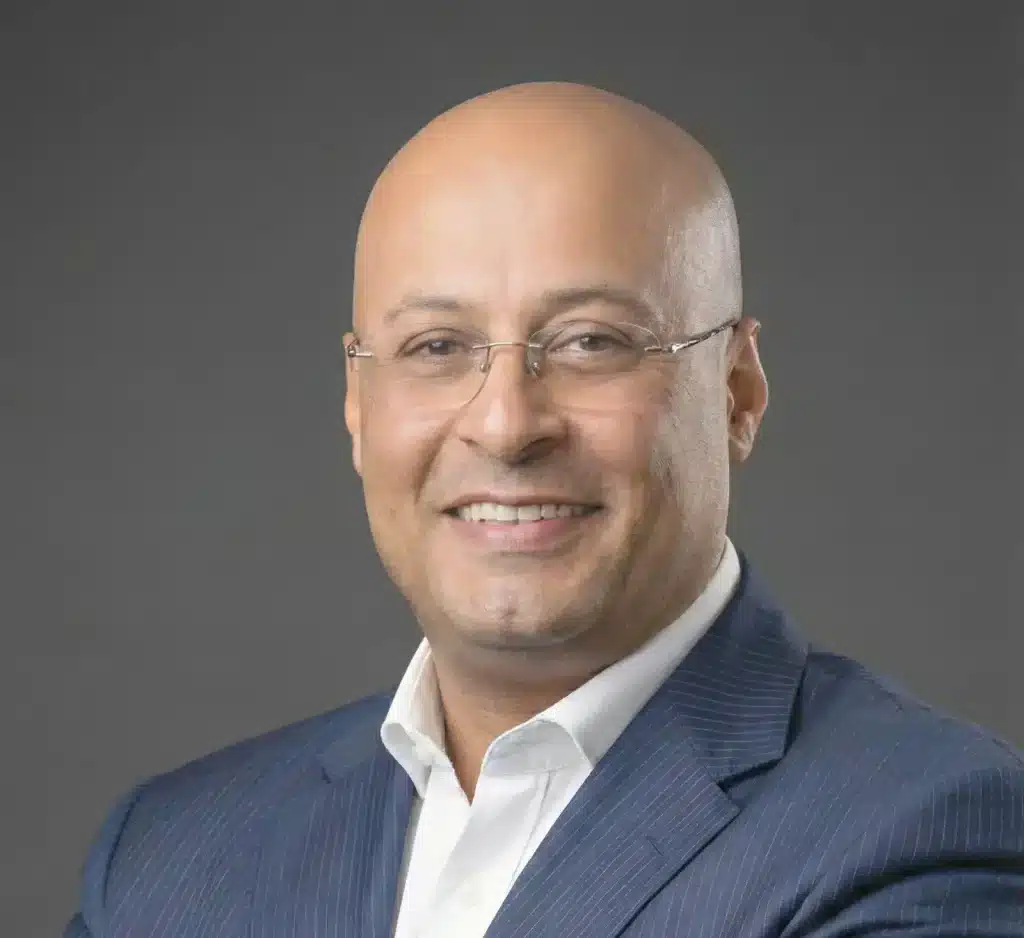
Managing Partner & Founder · TURN8
Kamal Hassan is the Managing Partner and Founder of TURN8 — the GCC’s integrated innovation platform for corporate venture building and strategic investment. With 30+ years of experience across the United States, MENA, and Europe, Kamal has built a rare track record at the intersection of corporate innovation, venture capital, and operational execution.