
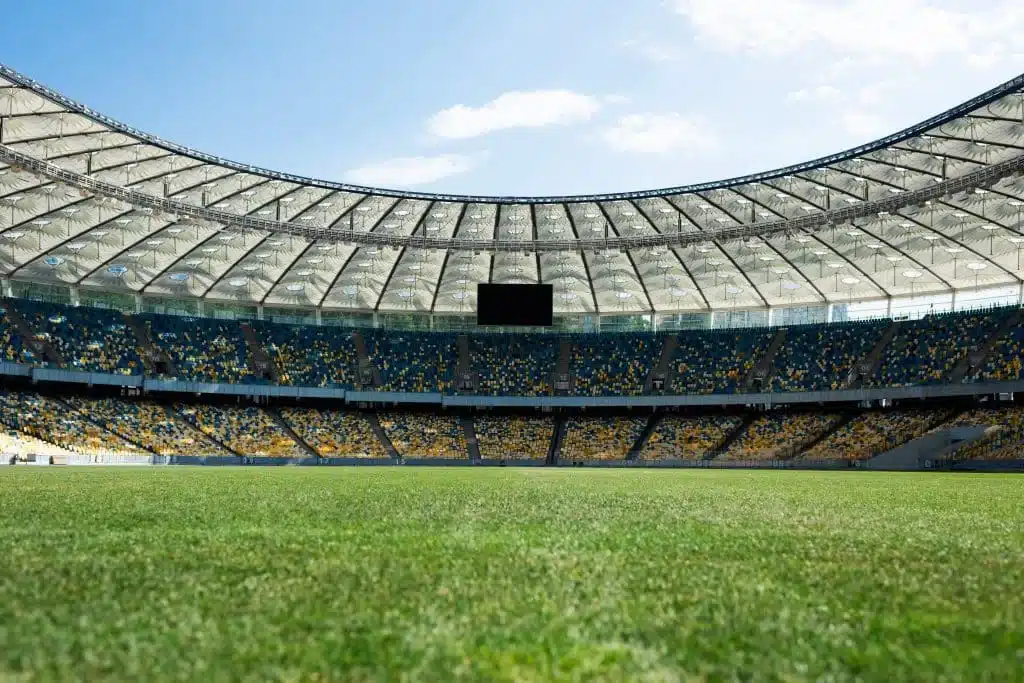
I attended Qatar 2022. Twenty-two games across all eight stadiums. I came back with great memories and one uncomfortable observation: there was no lasting technology value created beyond the event itself.
The stadiums were world-class. The logistics worked. But when the final whistle blew, what remained was physical infrastructure searching for a second act. Lusail Stadium, built for nearly 89,000 people, has hosted the AFC Asian Cup and has the 2026 Finalissima booked — but its long-term operating model as a community and commercial venue is still being defined. The post-tournament utilization question is real.
Saudi Arabia is now preparing 15 venues for FIFA 2034 — 11 new builds and four major redevelopments of existing stadiums. And this time, something structurally different is happening.
Smart Stadium Infrastructure for FIFA 2034
Qiddiya and NEOM venues have smart infrastructure designed into the foundation from day one — sensors, connectivity, data layers, operational systems — at a fraction of what legacy stadiums spend trying to modernize after construction.
What most teams miss is the timeline. The World Cup is a 30-day event. These venues need to operate for 30 years. The venture opportunity is in what runs them year-round.
Sports Tech Venture Capital Trends in the GCC
$2.2 billion was deployed into football technology during the first half of 2025 alone. That number sounds impressive until you look at where the money actually went. According to SportsTechX, fan-focused solutions — streaming, Web3 platforms, engagement apps, second-screen experiences, broadcast tools — have absorbed roughly 63% of cumulative football technology funding since 2020.
None of that runs a stadium.
The real bottleneck — the one that creates venture-scale opportunity — is club and league management infrastructure. The operational systems that most sports properties run on are 10 to 15 years behind enterprise software. Scheduling, staffing, demand forecasting, energy management, guest flow, vendor coordination, security operations. These are the systems that determine whether a venue makes money on the 340 non-event days each year.
Saudi Arabia’s position here is unusual. Most countries hosting a World Cup are working with existing venues that carry decades of technical debt. They patch. They integrate. They spend enormous sums making old buildings slightly smarter.
Saudi is starting from near-zero on most of these venues. Eleven new builds with clean architecture and no legacy systems to work around. That is a greenfield technology deployment at a scale that does not exist anywhere else in global sports infrastructure right now.
The Billion-Dollar Venue Operating System Market
Where this usually breaks is in how companies evaluate the opportunity. Tournament contracts — ticketing, security, broadcast infrastructure — are real revenue, but they are time-bound. The technology layer that creates durable value is what runs these venues year-round. Guest experience AI that learns visitor patterns across hundreds of events and adjusts operations in real time. Demand forecasting systems that manage staffing, inventory, and energy consumption based on event type, weather, and historical data. Last-mile logistics platforms that coordinate transportation, parking, food delivery, and crowd movement for a venue district.
These are not feature requests. These are entire companies waiting to be built.
The execution reality is that Saudi’s giga-projects are creating a market that did not previously exist. Qiddiya alone is not just a sports venue — it is a 360-plus-square-kilometer entertainment city. NEOM’s stadium at The Line is designed as a permanent mixed-use destination. King Salman Stadium in Riyadh is being positioned as a year-round events hub anchoring an entire sports district.
Each of these venues needs an operating system. Not one piece of software, but an integrated technology stack that manages the full lifecycle of venue operations: pre-event planning, real-time operations, post-event analytics, and everything between events that keeps the economics viable.
What I have seen across 13 years of building ventures in the GCC is that the biggest opportunities are rarely where the headlines point. Everyone is talking about FIFA 2034 as a construction story. The construction will happen regardless. It is funded, planned, and moving.
The technology layer is where the venture opportunity lives. And it is where most of the capital is not yet flowing.
Large infrastructure programs in the GCC consistently create demand for technology solutions that do not yet exist at the required scale. The companies that build those solutions during the buildout are the ones that capture the market. By the time the venues open, the operating systems need to already work. The deployment window starts now.
One more thing worth noting. Saudi’s venue program is not happening in isolation. It sits inside Vision 2030’s broader push to build a sports and entertainment economy. The Saudi Pro League investment. The PIF-backed esports initiatives. LIV Golf. Formula 1 in Jeddah. Boxing. Tennis. These all need venues. They all need operations technology. The FIFA stadiums are the highest-profile deployment, but the addressable market is the entire sports infrastructure being built across the Kingdom.
Risks in Saudi Sports Infrastructure Investments
A few honest caveats. Giga-projects have a history of scope adjustments. Timelines shift, budgets get recalibrated, and venue programs can be consolidated or phased differently than announced. The venue developers themselves — PIF-backed entities with deep pockets and in-house technology capabilities — may choose to build operating systems internally rather than procure them from startups. And post-tournament venue utilization is an unsolved problem globally, not just in the Gulf. Building technology for a 30-year operating model assumes 30 years of demand, which is an assumption worth stress-testing against actual event calendars and population projections for each venue location.
For any corporate venture team or CVC evaluating sports technology in the GCC, the question is whether your thesis targets the tournament contracts or the operating systems that run these venues for the next 30 years. The infrastructure is being built now. The technology layer that runs it is still wide open.
Frequently Asked Questions
What are the technology opportunities for FIFA 2034 in Saudi Arabia?
The primary venture opportunity lies in building integrated venue operating systems—such as demand forecasting, guest experience AI, and energy management—to run stadiums efficiently year-round.
How is Saudi Arabia building stadiums differently for FIFA 2034?
Unlike legacy stadiums that require expensive retrofitting, Saudi venues like Qiddiya and NEOM are integrating smart infrastructure, sensors, and data layers from day one of construction.
Why is sports tech venture capital shifting in the GCC?
While past funding focused heavily on fan-engagement apps, the current GCC market demands B2B enterprise software and logistics platforms to manage the long-term economics of giga-project venues.
What is a venue operating system?
A venue operating system is an integrated technology stack that manages the full lifecycle of stadium operations, including pre-event planning, real-time logistics, crowd movement, and post-event analytics.
Learn More:

Founder & Managing Partner
Kamal Hassan is the Founder & Managing Partner of TURN8 — the venture operating partner for GCC corporates and sovereign-linked institutions. With 30+ years of experience across the United States, MENA, and Europe, Kamal has built a rare track record at the intersection of corporate innovation, venture capital, and operational execution.